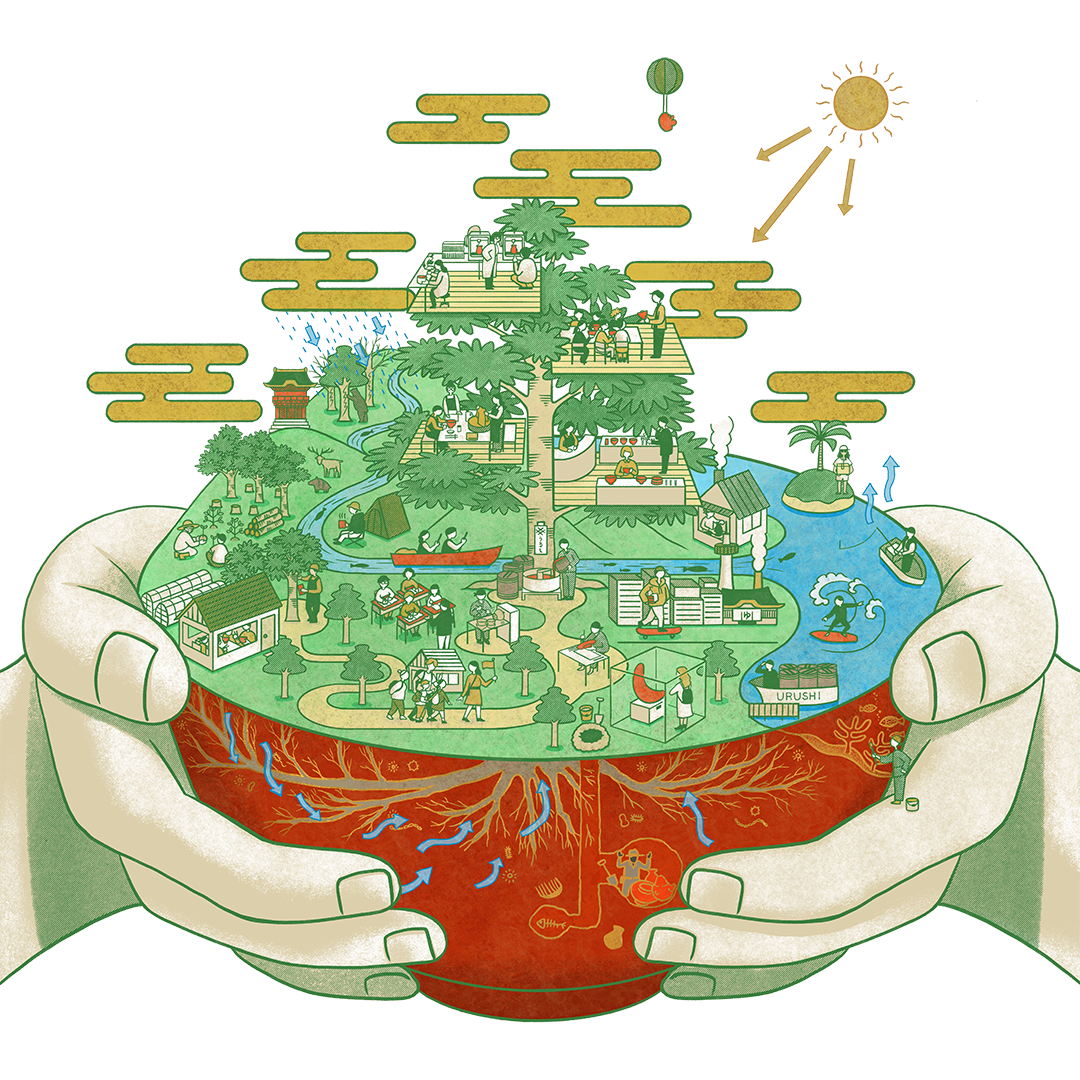
ウルシの木を余すことなく使う。堤淺吉漆店が目指す循環型ものづくり
The Full Cycle of the Urushi Tree: Rethinking Circular Craftsmanship
漆と聞くと、多くの人は「樹液」や「漆塗り」を思い浮かべるかもしれません。けれど、一本のウルシの木が育つまでには約15年という長い年月がかかります。
私たちは、その大切な資源を樹液だけで終わらせるのではなく、「ウルシの木を一滴も、一片も無駄にしない」という考えのもと、木そのものを活かす取り組みを続けています。
When people hear the word urushi, many may think only of tree sap or traditional coatings. However, it takes around 15 years for a single urushi tree to grow.
At Tsutsumi Asakichi Urushi Store, we believe such a precious resource should not end with sap extraction alone. Guided by the idea of “wasting not a single drop or fragment of the urushi tree,” we continue exploring ways to utilize the tree as a whole.
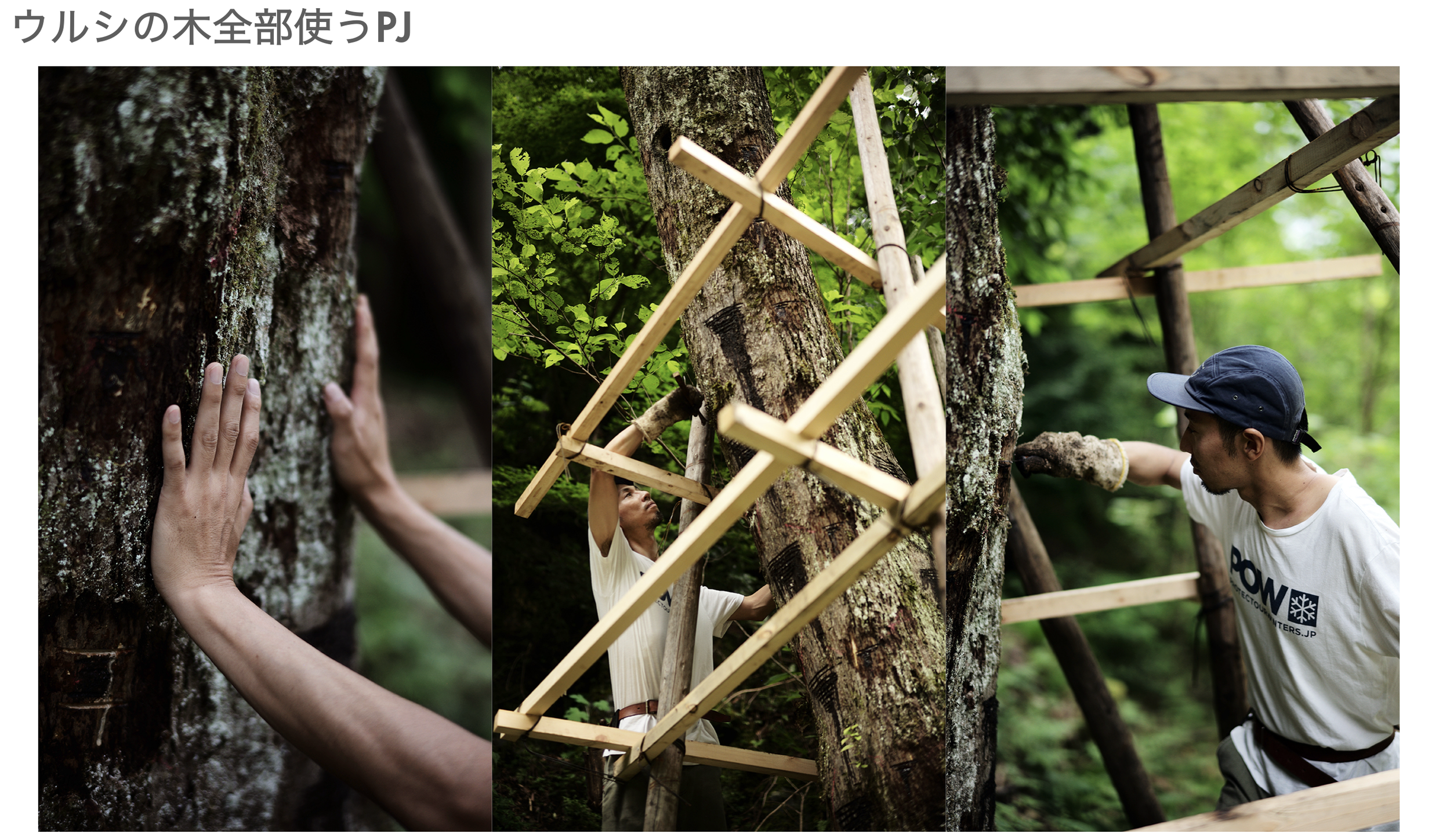
樹液を採った後の木にも価値がある
これまで、樹液採取後のウルシ材は杭や浮き材など限られた用途で使われることがありました。しかし現在では、その活用機会は多くありません。
そこで堤淺吉漆店では、ウルシ材が持つ「軽さ」や「水への強さ」といった特徴に注目し、新しい使い道を模索しています。
例えば、
* サーフボード
* 器や木工製品
* 植木鉢
* インテリア素材
など、工芸の枠を超えたプロダクト開発に挑戦しています。
こうした取り組みは、ウルシの木が持つ可能性を広げるだけでなく、「漆=塗料」という固定概念を更新する試みでもあります。
The Value of the Tree Beyond Sap
Traditionally, after sap harvesting, urushi wood was sometimes used for stakes or floating materials. Today, however, opportunities for using the remaining wood have become limited.We began to focus on the unique qualities of urushi wood—its light weight and resistance to water—and explore new possibilities for its use.
For example, we are experimenting with applications such as:
* Surfboards
* Tableware and wooden crafts
* Plant pots
* Interior materials
These projects challenge conventional boundaries of craftsmanship while expanding the potential of the urushi tree itself.
They also encourage a new perspective: urushi is not merely a coating material, but a versatile natural resource.
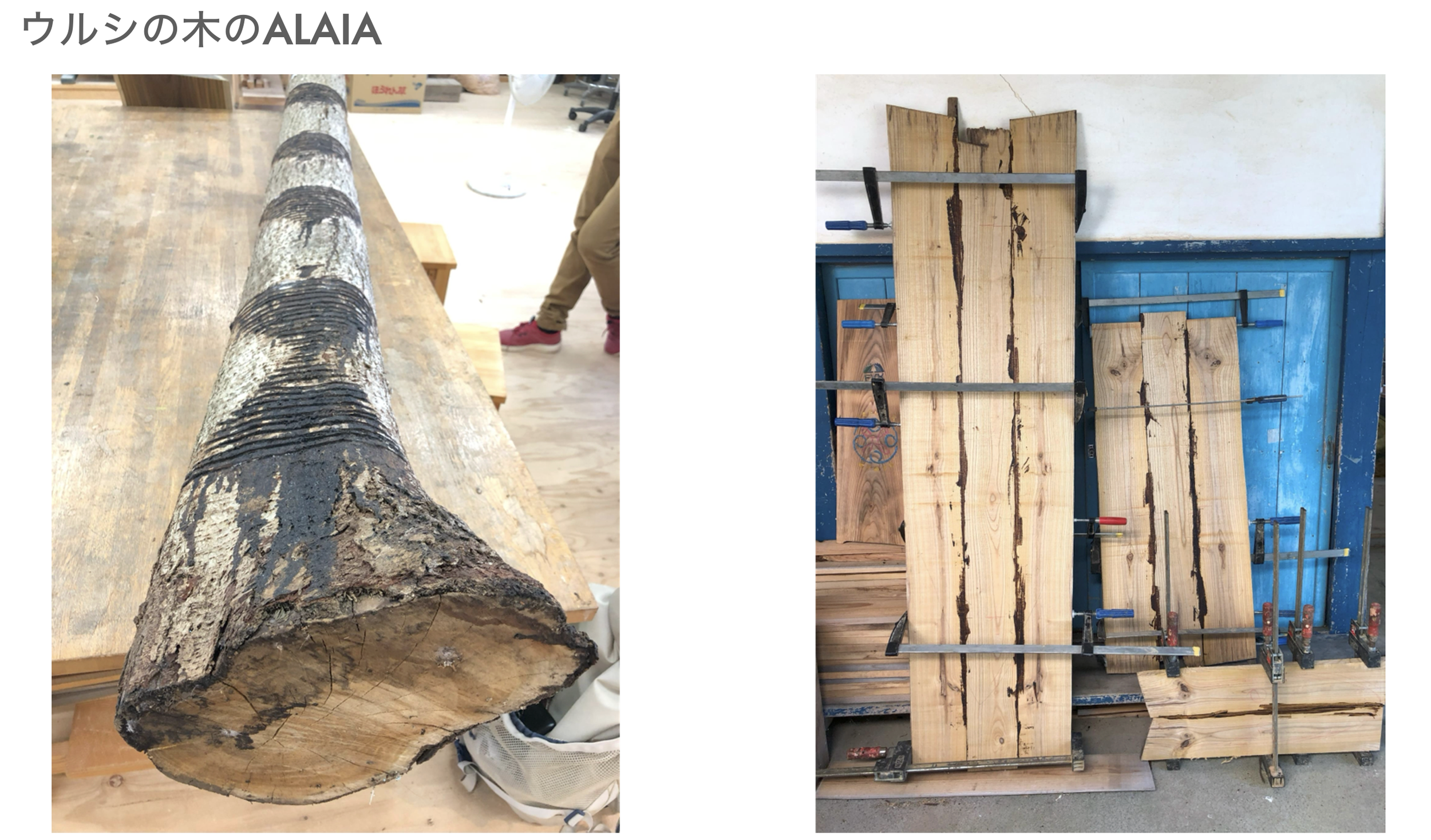
ウルシの木は細いため、漆を接着剤にしてクランプにて固定して幅のある材を2ヶ月かけて準備しました
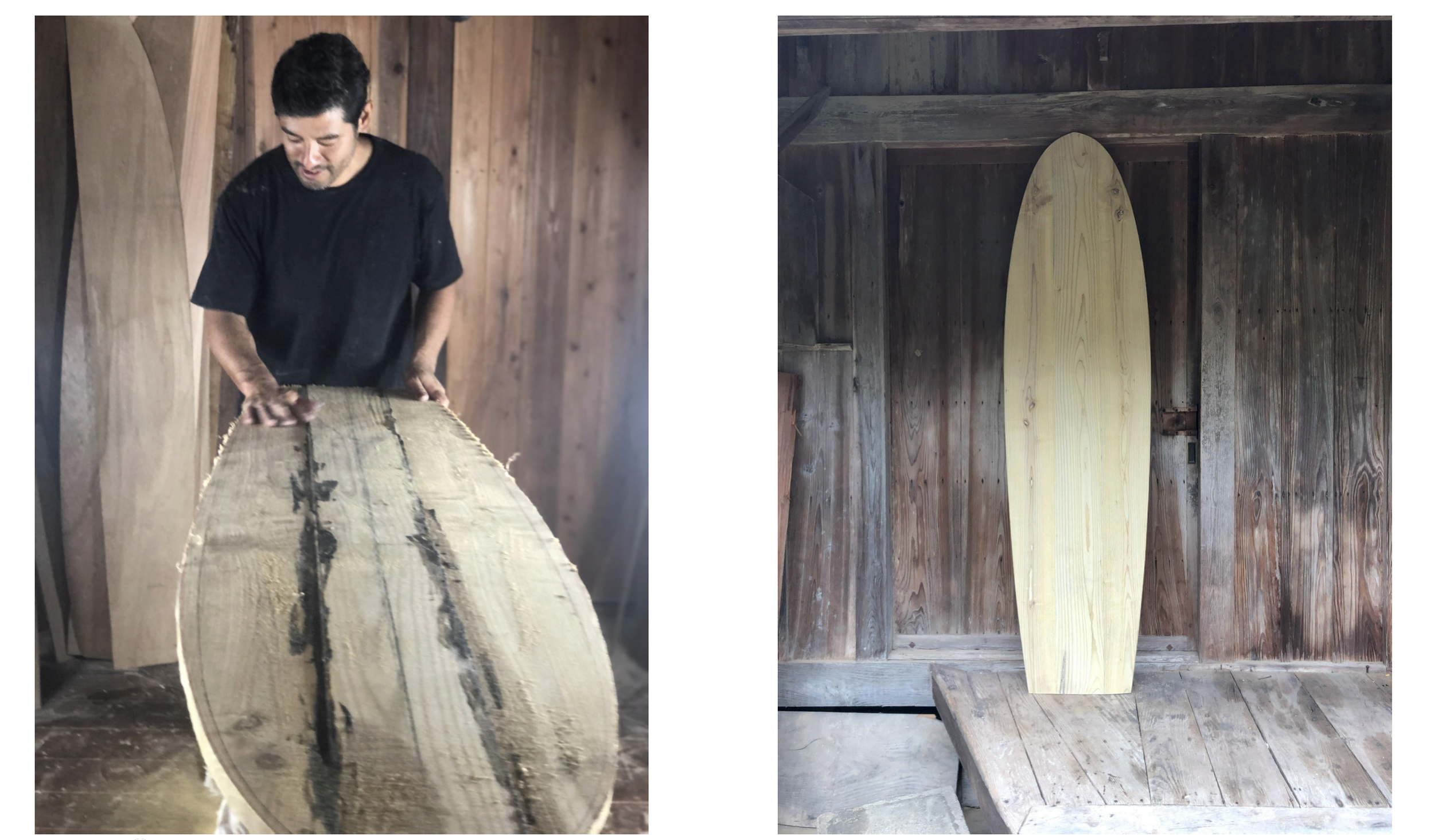
シェイパーのホドリゴが素晴らしいウルシの木のALAIA(古代ハワイアンのサーフボード)を生み出してくれました
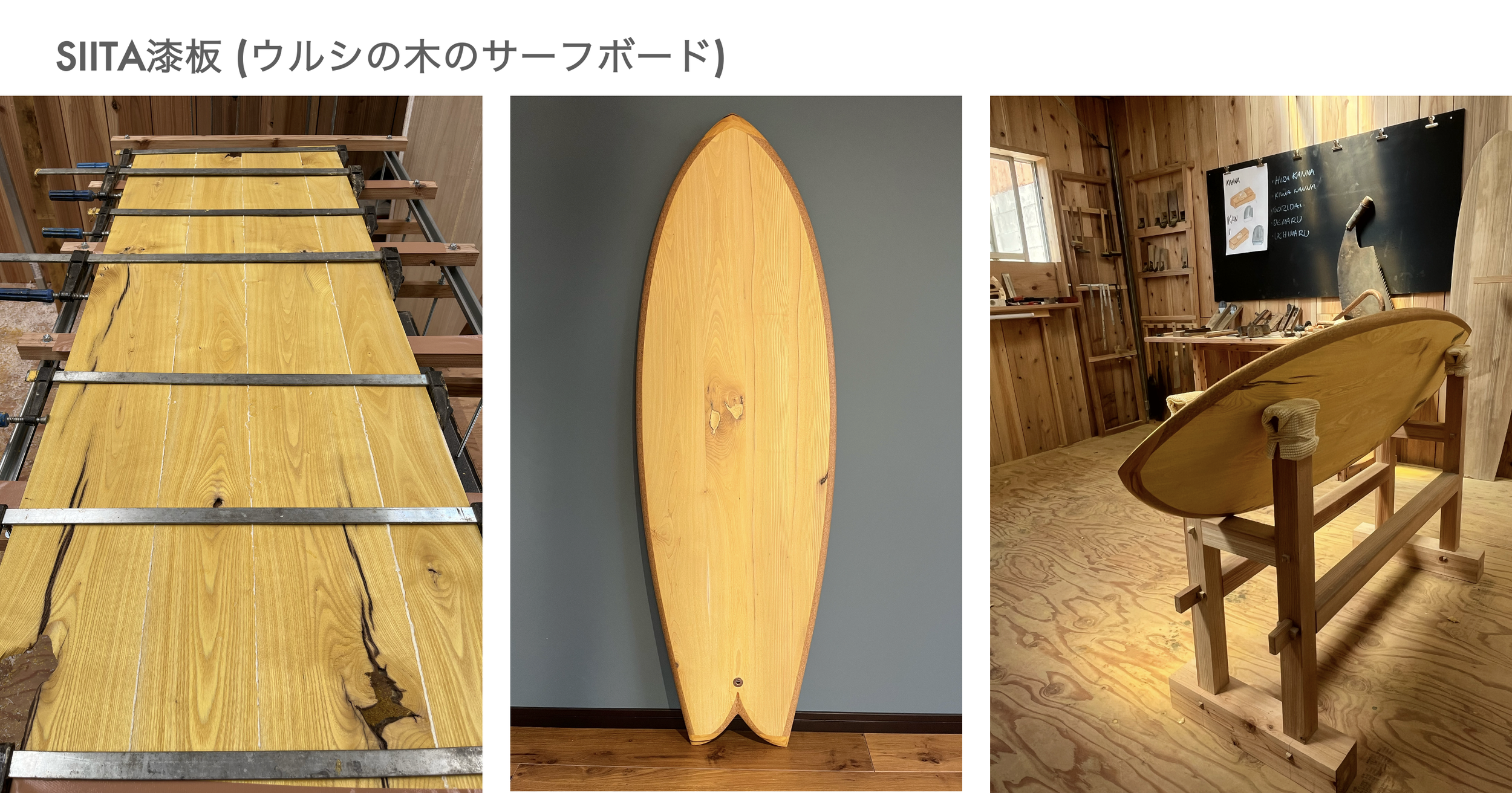
ウルシの木のサーフボードも制作
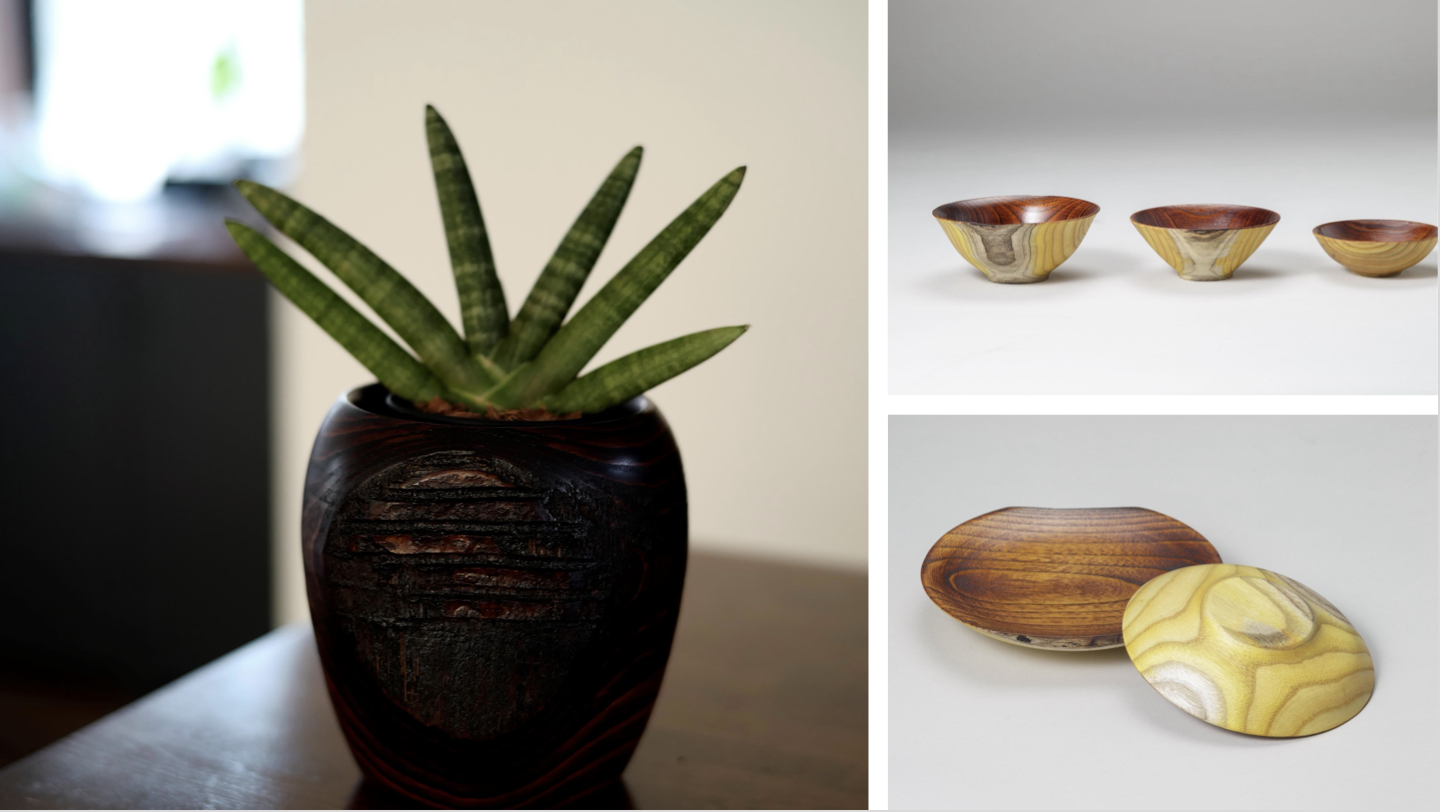
ウルシの木を使った植木鉢 掻き傷がデザインになっています
削り屑や端材も、新しい価値へ
木材加工の際に出る削り屑や端材も捨てません。
その一つが、ウルシ材を使った草木染めです。幹や枝のチップから抽出した染料は、黄〜ベージュ系のやわらかな色合いを生み出し、自然素材ならではの温かみがあります。
さらに、
* 抗菌性
* 消臭性
* 耐光性(色あせしにくさ)
といった機能面も期待されています。
シルクやウールなどの天然繊維との相性が良く、綿や麻にも加工を施すことで染色が可能です。
「漆はかぶれる」というイメージを持たれることがありますが、染色に使用するのは樹液ではなく木部です。適切な処理を行うことで、安全性にも配慮しています。
Giving New Life to Wood Chips and Leftover Materials
Even wood chips and scraps generated during processing are not discarded. One example is natural dyeing using urushi wood. Dye extracted from branches and trunk chips creates soft yellow-to-beige tones with a warmth unique to plant-based materials.
In addition, these dyes are valued for functional properties such as:
* Antibacterial effects
* Deodorizing properties
* Light resistance (less fading over time)
They work particularly well with natural fibers such as silk and wool, and can also be adapted for cotton and linen through additional treatment.
Some people associate urushi with skin irritation. However, these dyes are produced from the wood itself rather than sap, and with proper processing, safety concerns are greatly reduced.
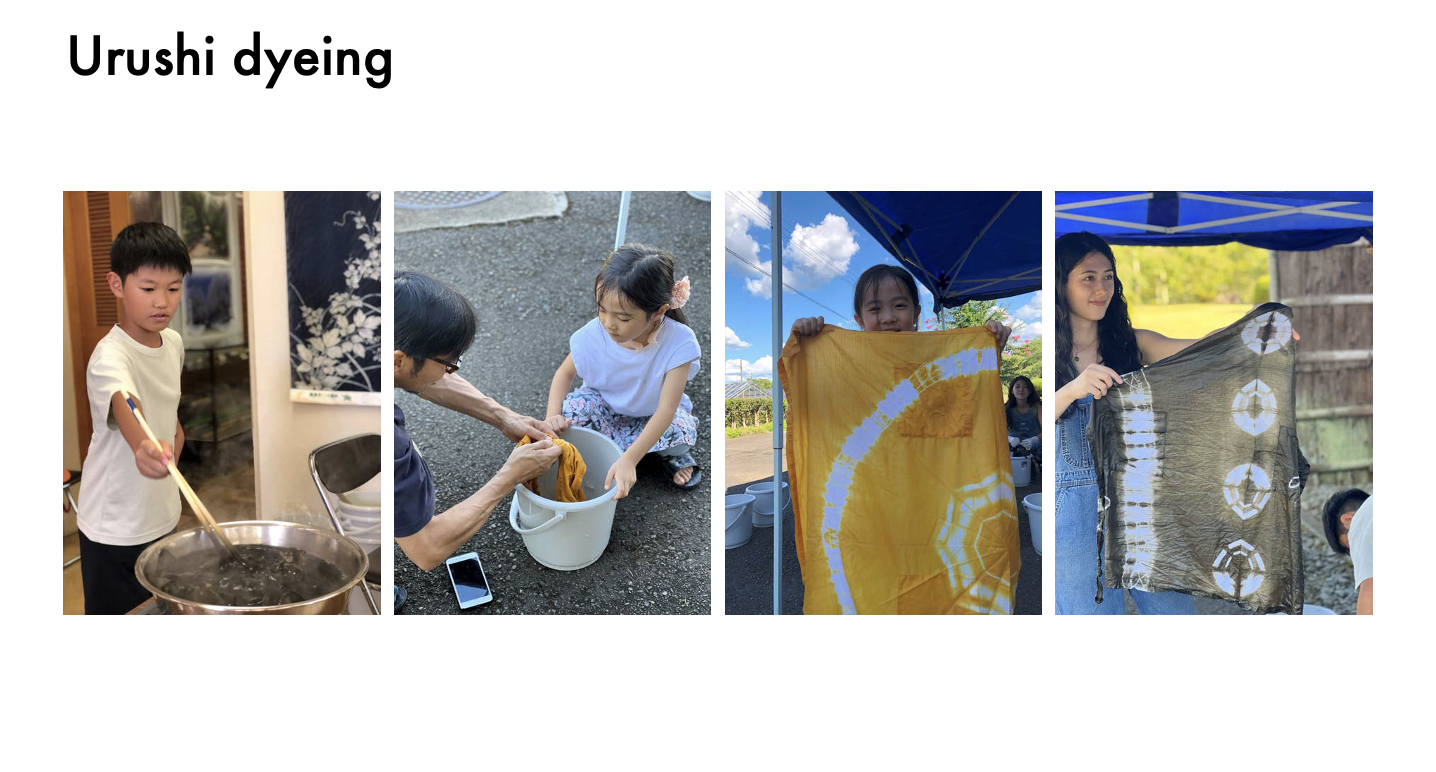
漆を“採る”だけでなく、“循環させる”へ
このプロジェクトが目指しているのは、樹液だけを利用する従来の仕組みから、木材や副産物まで含めて活用する循環型のものづくりへの転換です。
一本の木を育て、採取し、加工し、使い、残った素材にも新たな役割を与える。
その循環によって、未利用資源を減らし、環境負荷を抑えながら、新しい工芸やプロダクトの価値を生み出していくことができます。
From “Harvesting” to “Circulating” Resources
This project aims to move beyond the conventional model of relying only on sap extraction and toward a circular system that utilizes wood and by-products as well.
Growing a tree, harvesting from it, processing it, using it, and then giving remaining materials a new role—Through this cycle, we can reduce unused resources, lower environmental impact, and create new values in craft and design.
未来へ残したい、ウルシの循環
私たちは、漆を単なる伝統素材として守るだけではなく、現代社会の中で持続可能な資源として活かしていきたいと考えています。
ウルシの木を余すことなく使うことは、自然への敬意であり、次の世代へ素材と文化をつなぐための挑戦でもあります。
一本の木から、どれだけ多くの価値を生み出せるか。
その可能性を、これからも探り続けていきます。
The Future We Hope to Build Through Urushi
Our goal is not only to preserve urushi as a traditional material, but also to reimagine it as a sustainable resource for contemporary society.
Using every part of the urushi tree represents respect for nature and an effort to pass materials, culture, and knowledge to future generations.
How much value can be created from a single tree?
We will continue exploring that possibility.