CNN「Call to Earth」でBEARS WOOD PROJECT・漆板-siita-が紹介されました
English is below.
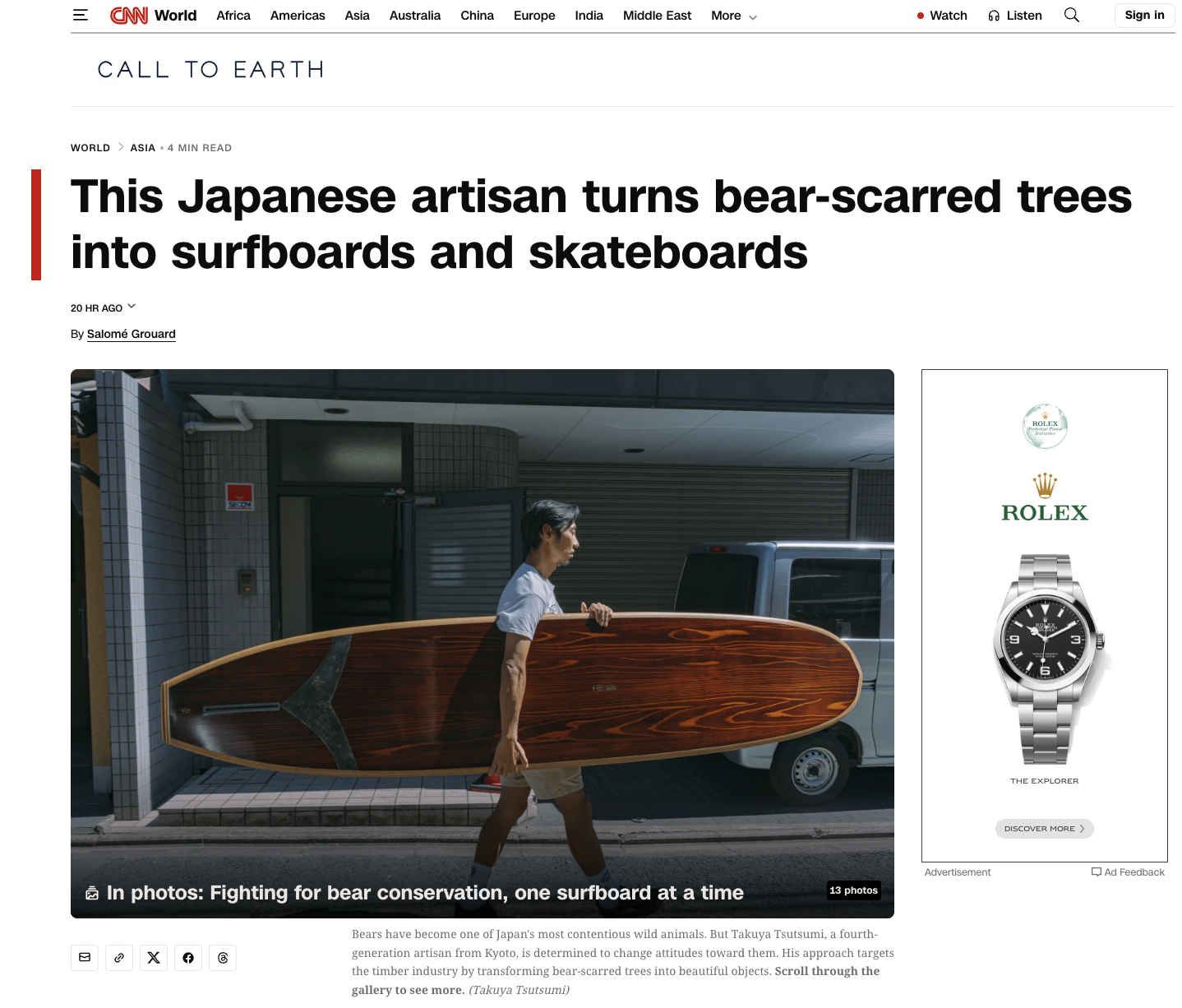
このたび、仲間たちと取り組む「BEARS WOOD PROJECT」と、木と漆のサーフボード「漆板-siita-」の活動が、CNNの環境シリーズ「Call to Earth」で紹介されました。
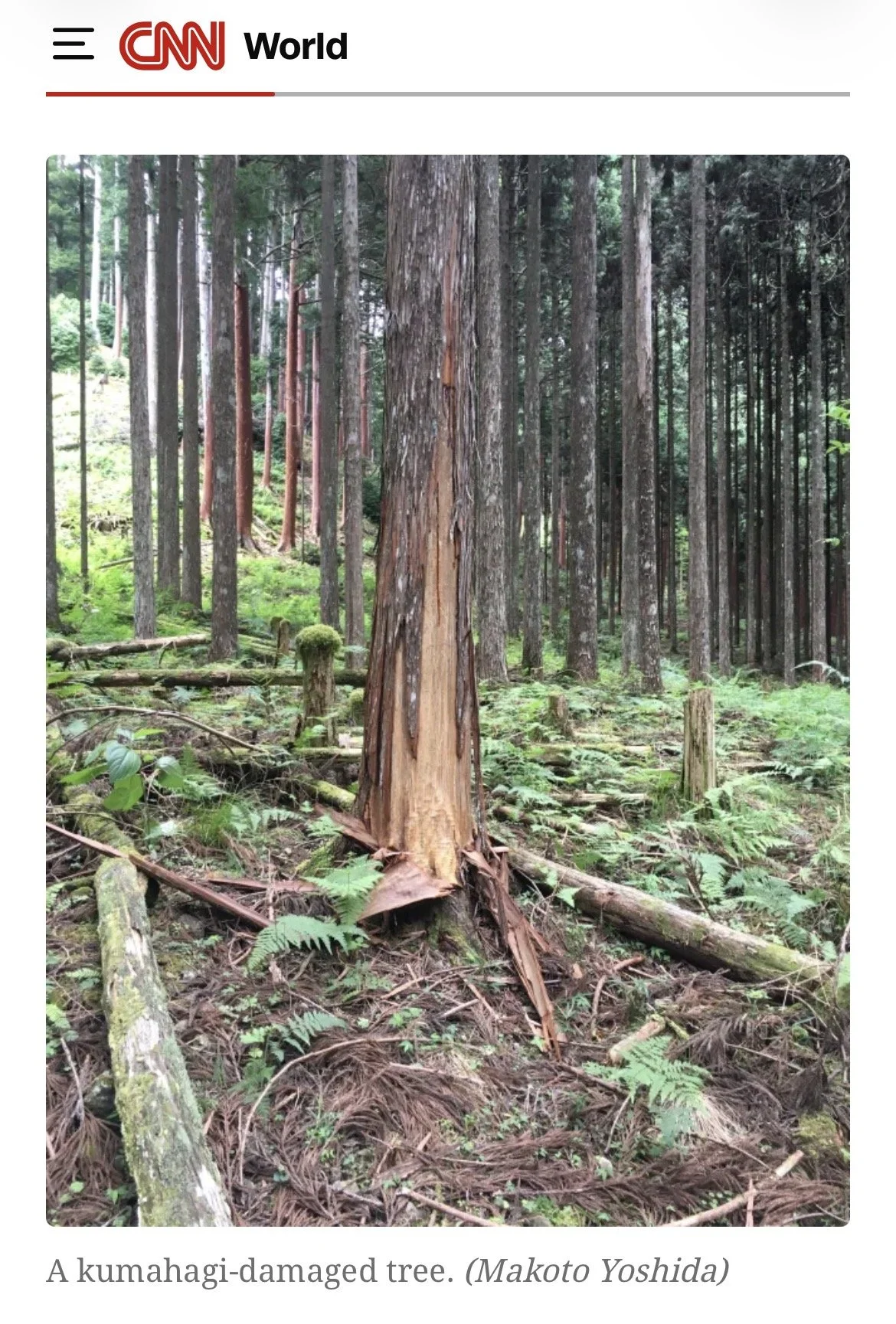
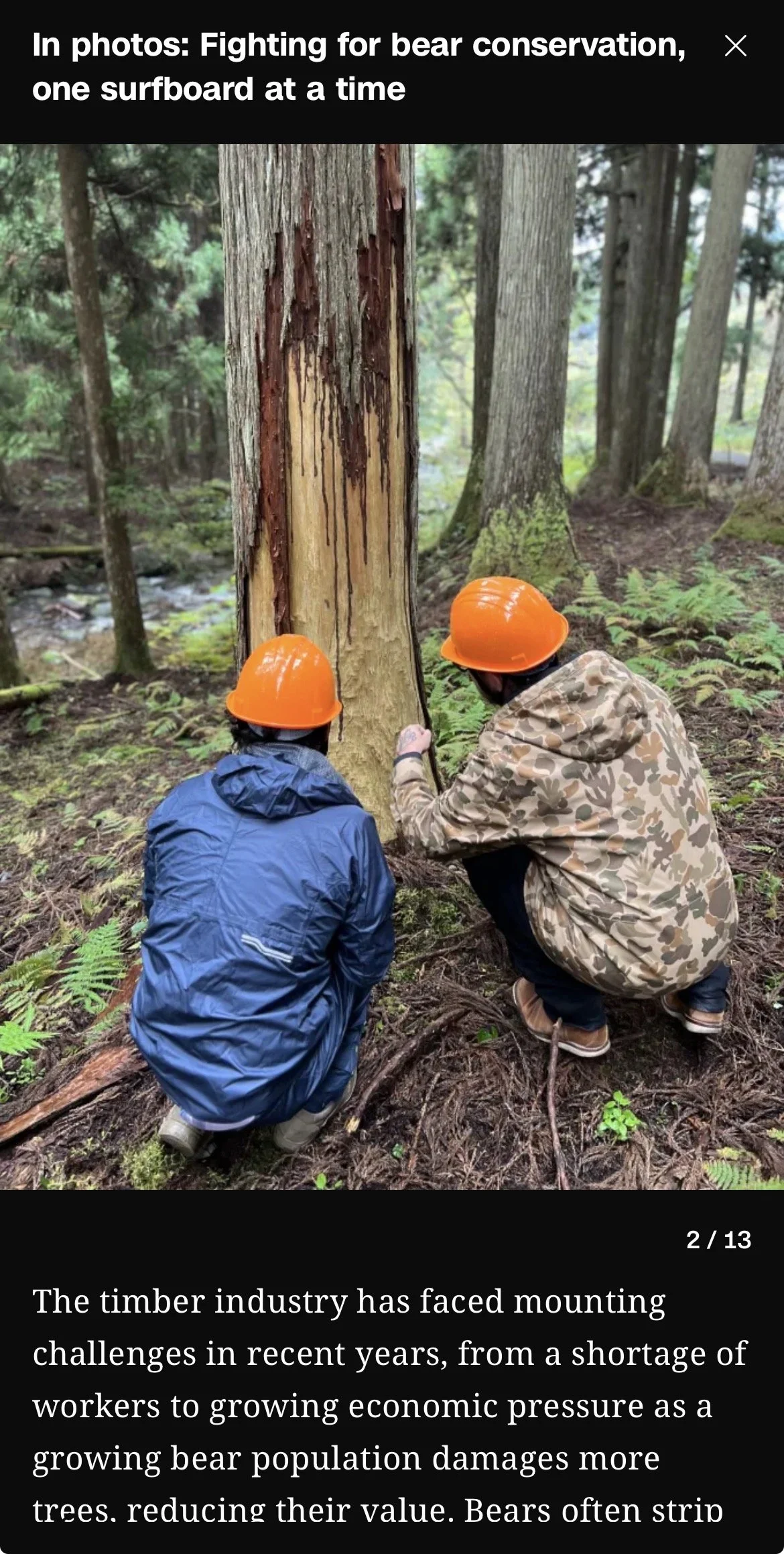
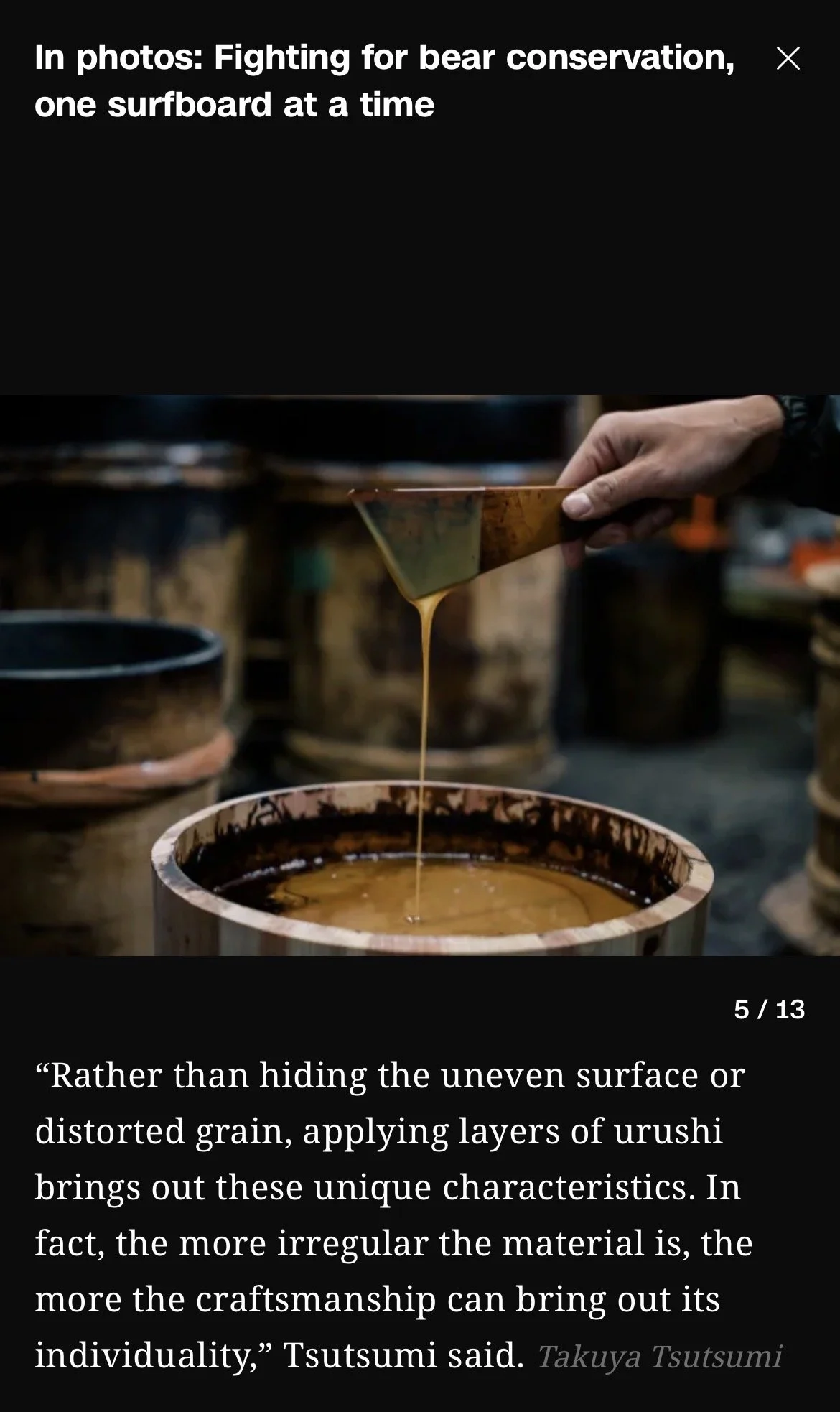
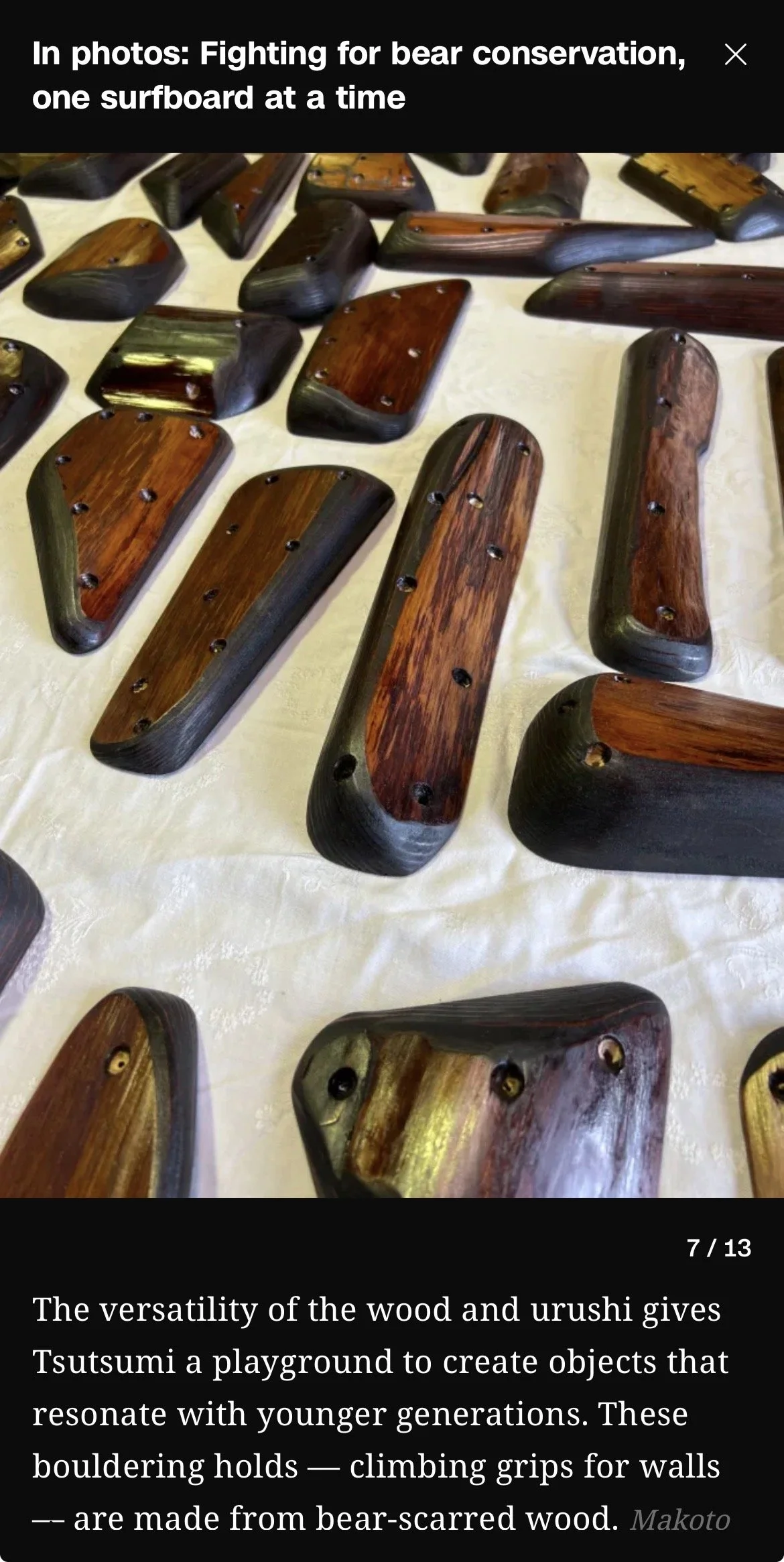
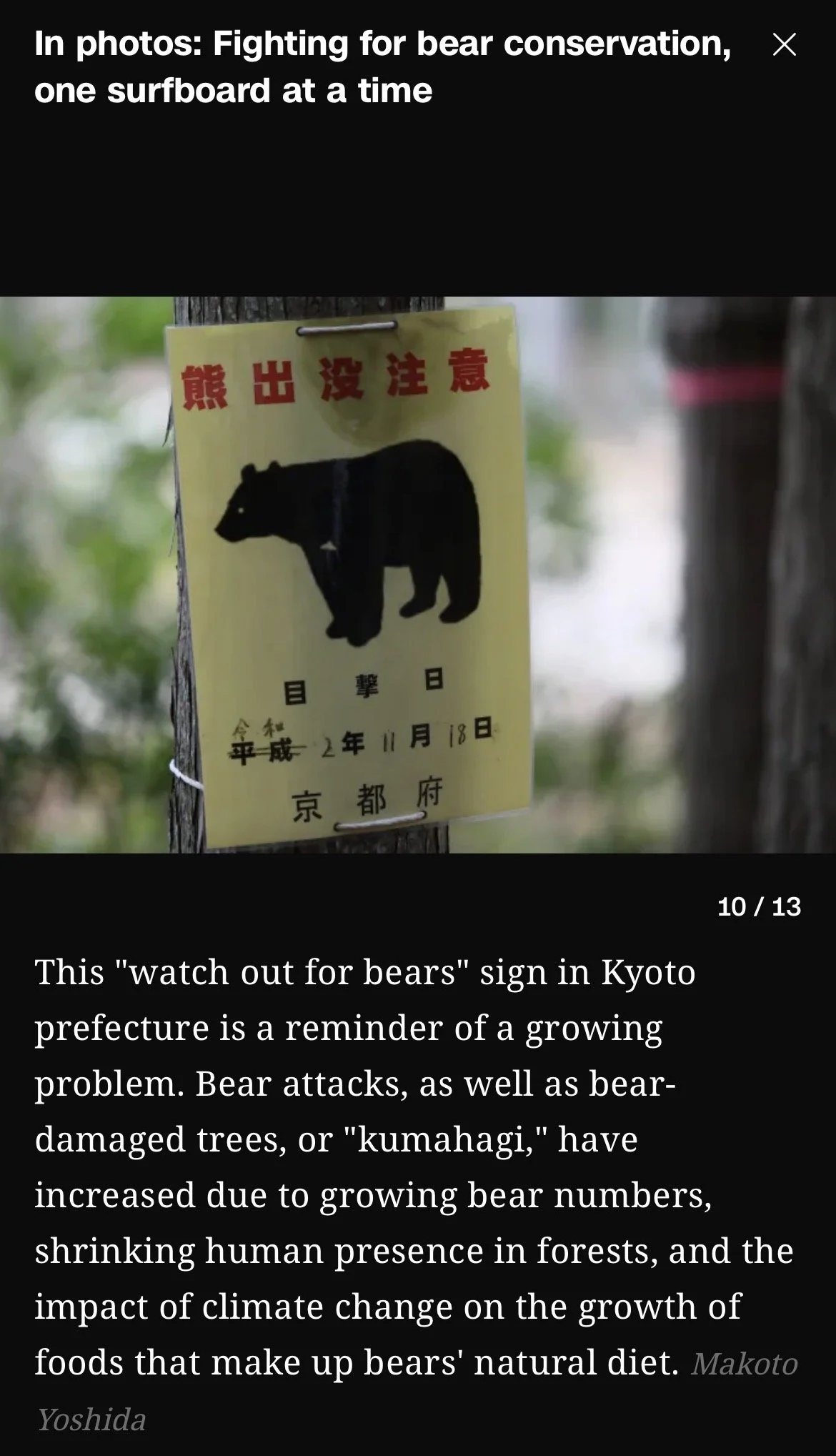
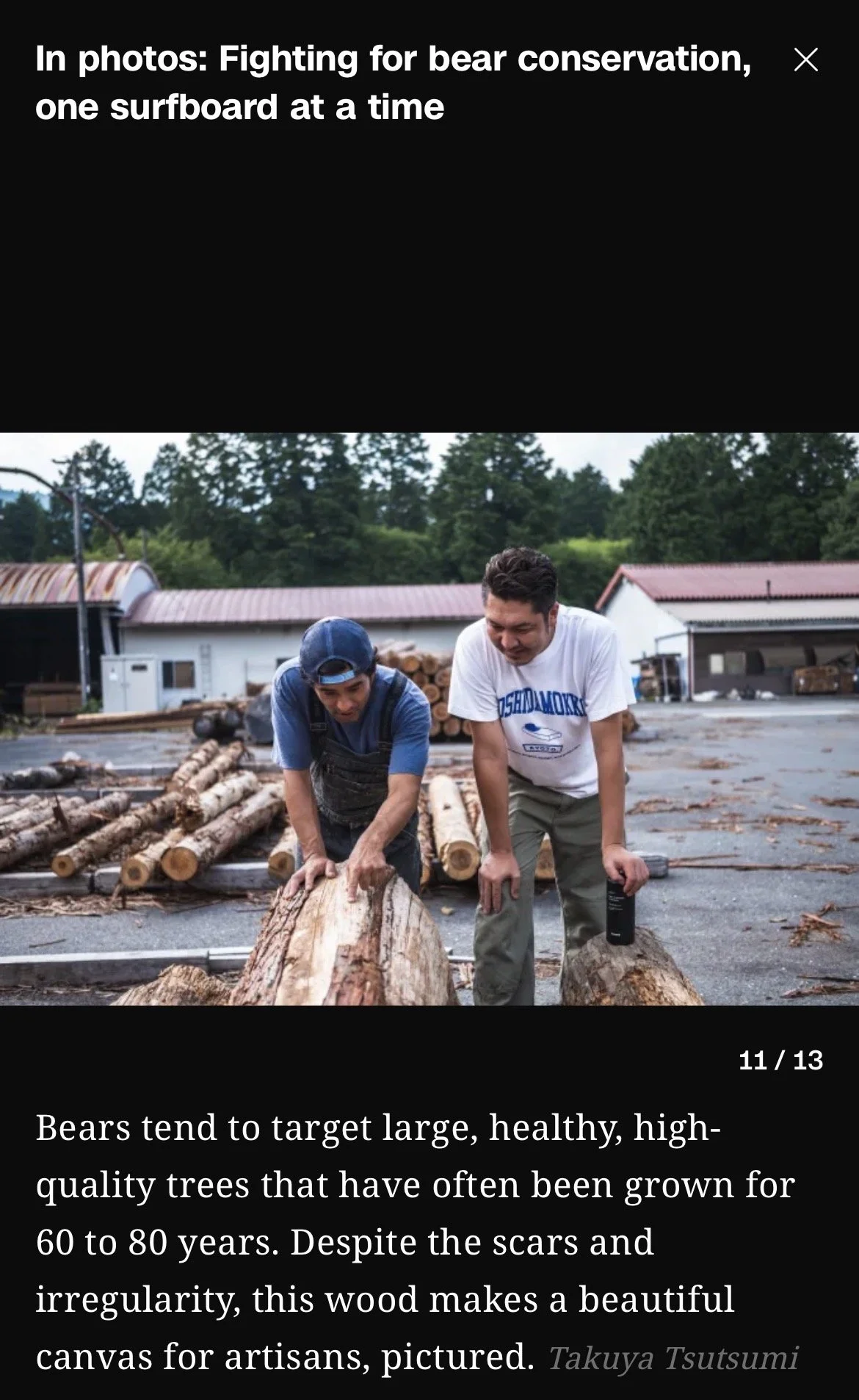
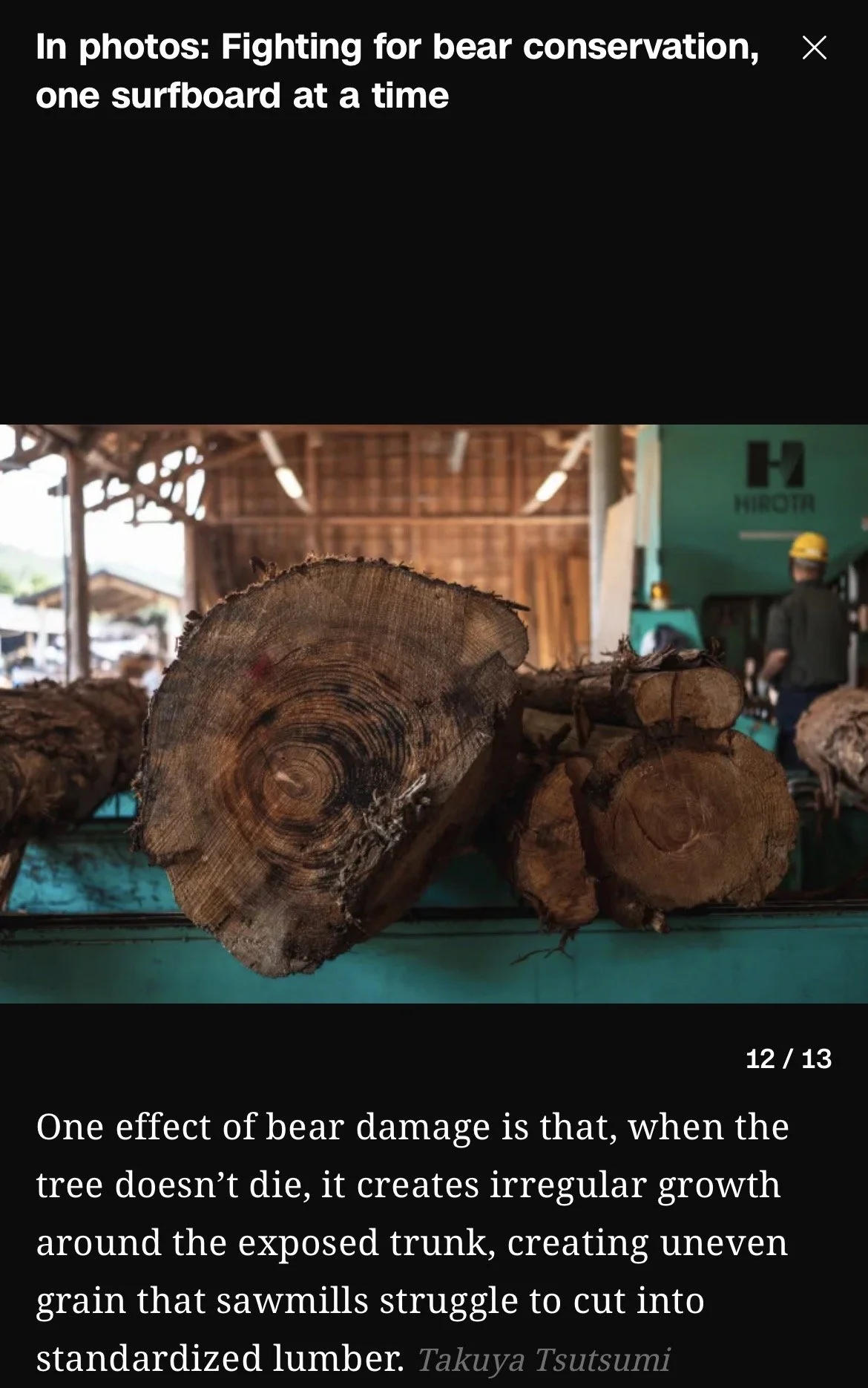
記事では、熊が樹皮を剥ぐ「クマ剥ぎ」によって、木材としての価値が下がってしまった木を捨てるのではなく、その傷や歪みも木の個性として活かし、新しい価値へと変えていく私たちの取り組みが紹介されています。
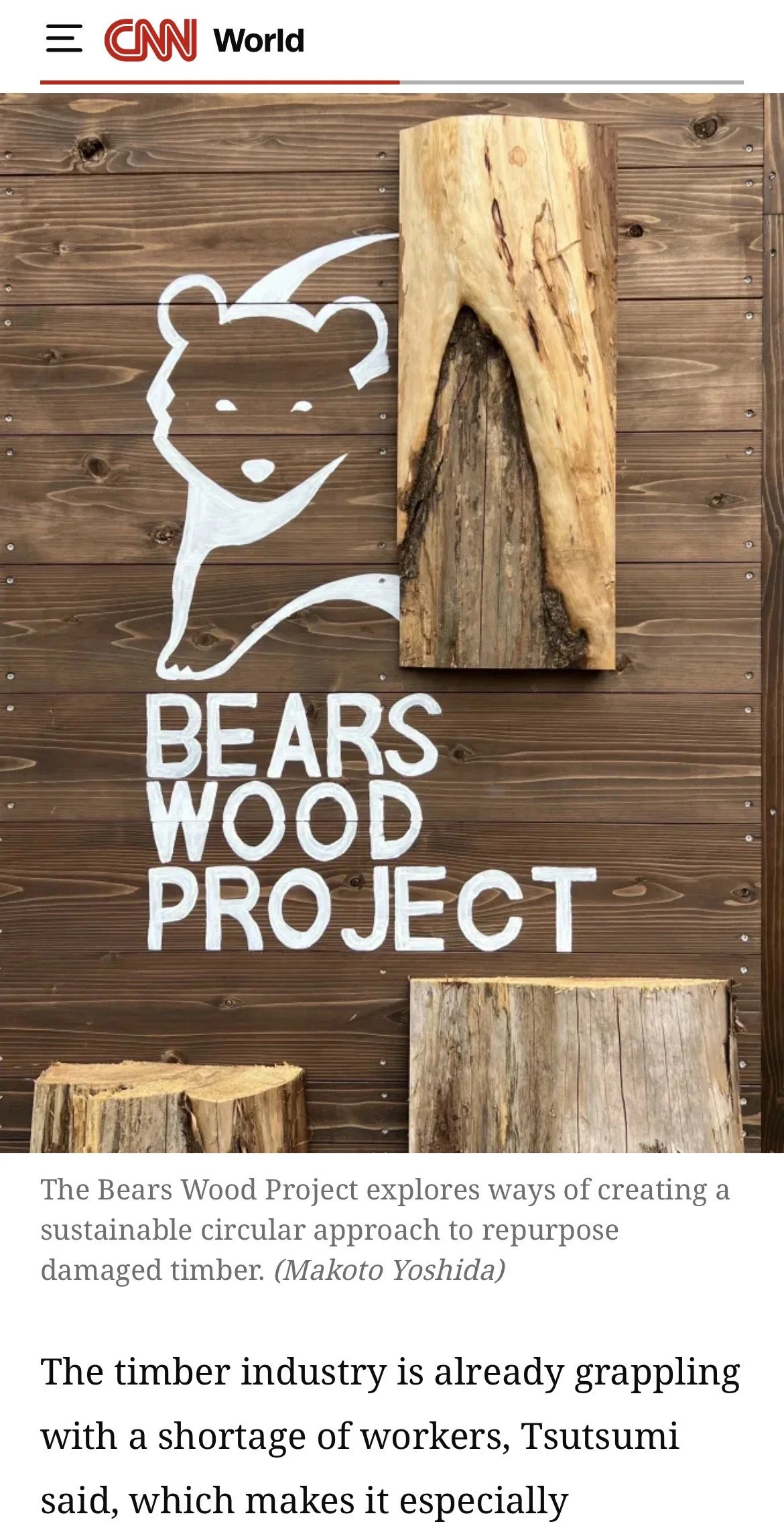
BEARS WOOD PROJECTを始めたきっかけは、
「熊を悪者にするのではなく、人と熊、そして森が共に生きていける環境を考えることはできないだろうか」
という問いでした。
長い年月をかけて育てられた木。
その木に残された熊の痕跡。
森で働く人たち。
そして、その木から新しいものをつくる職人たち。
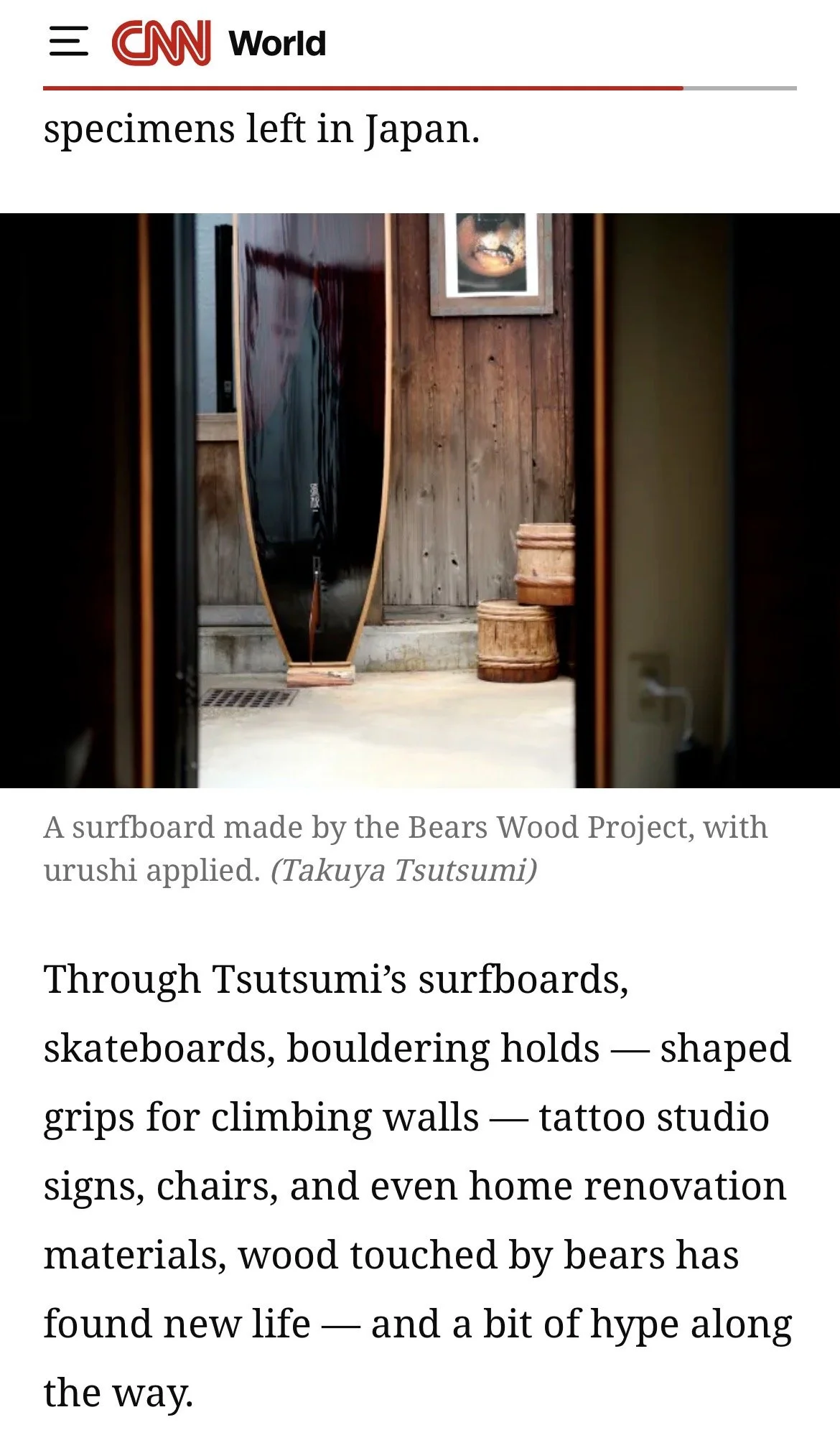
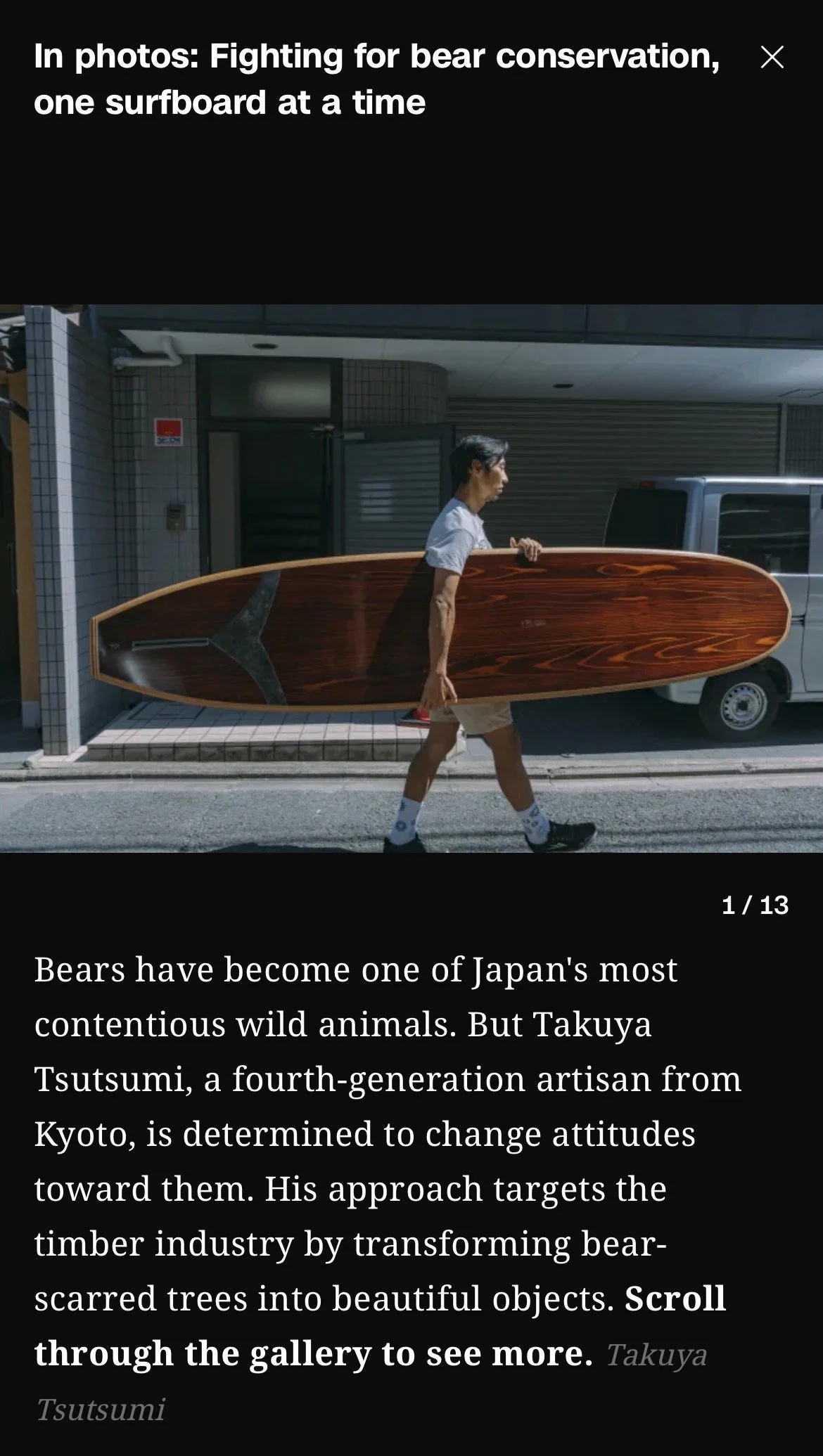
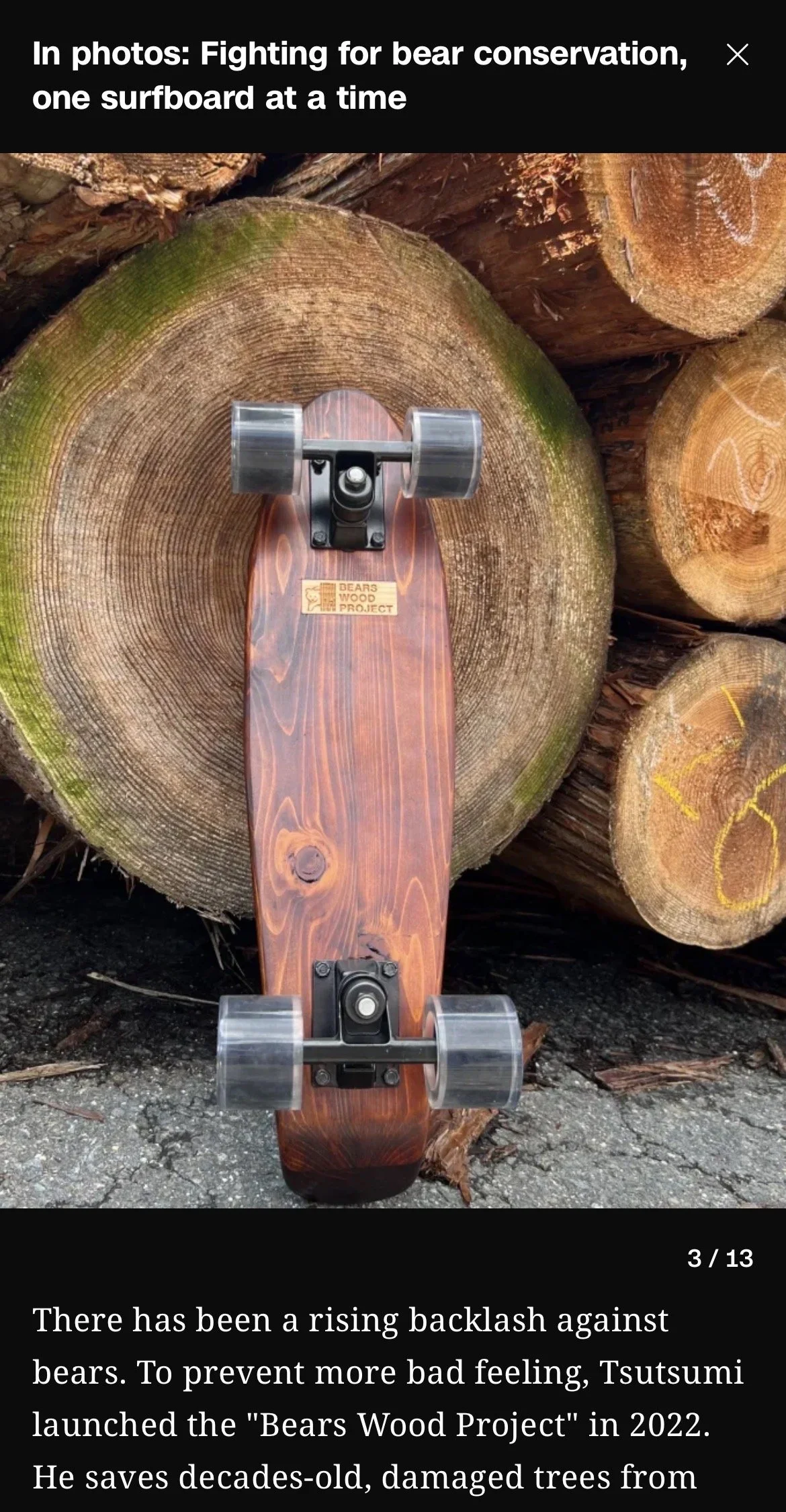
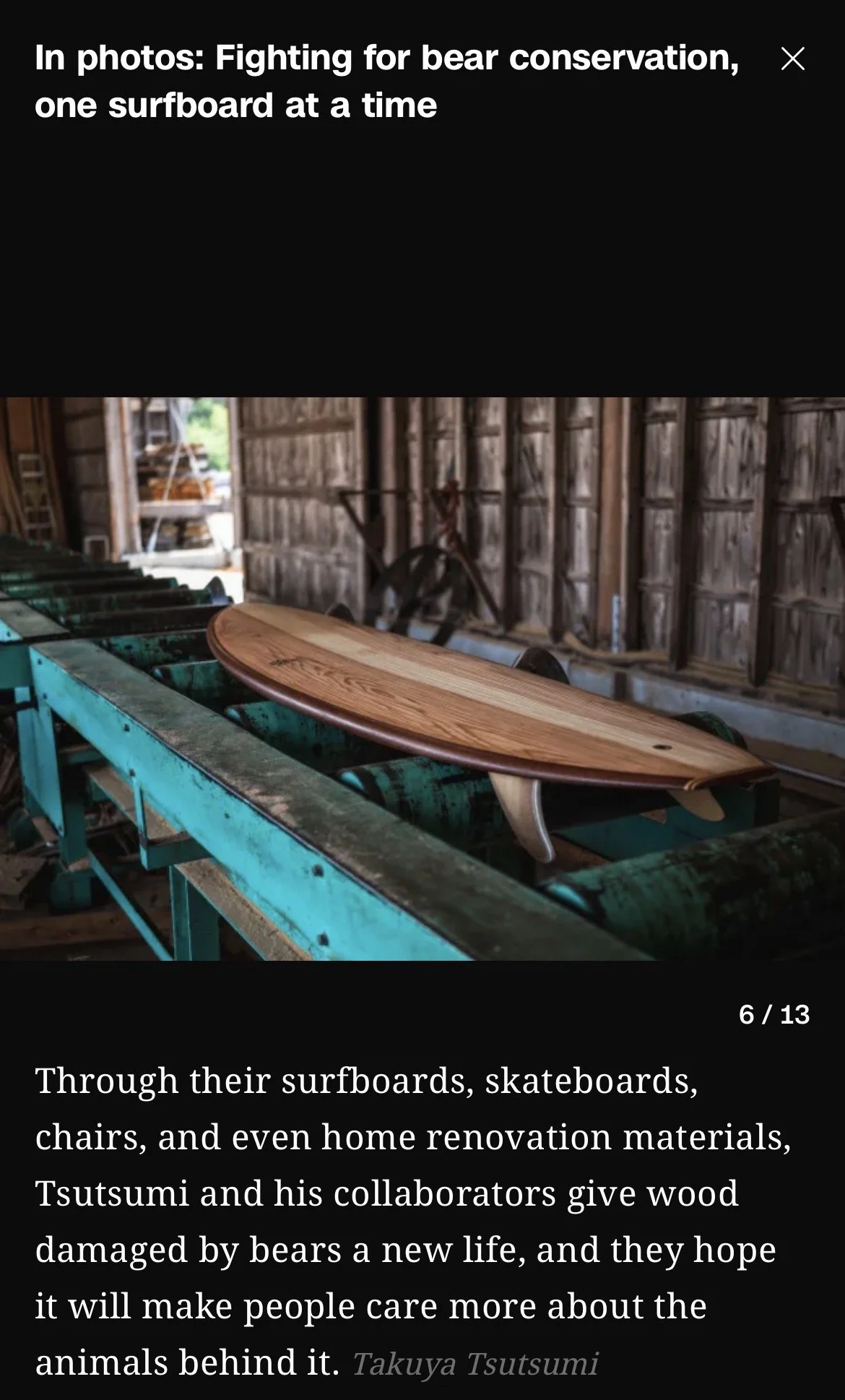
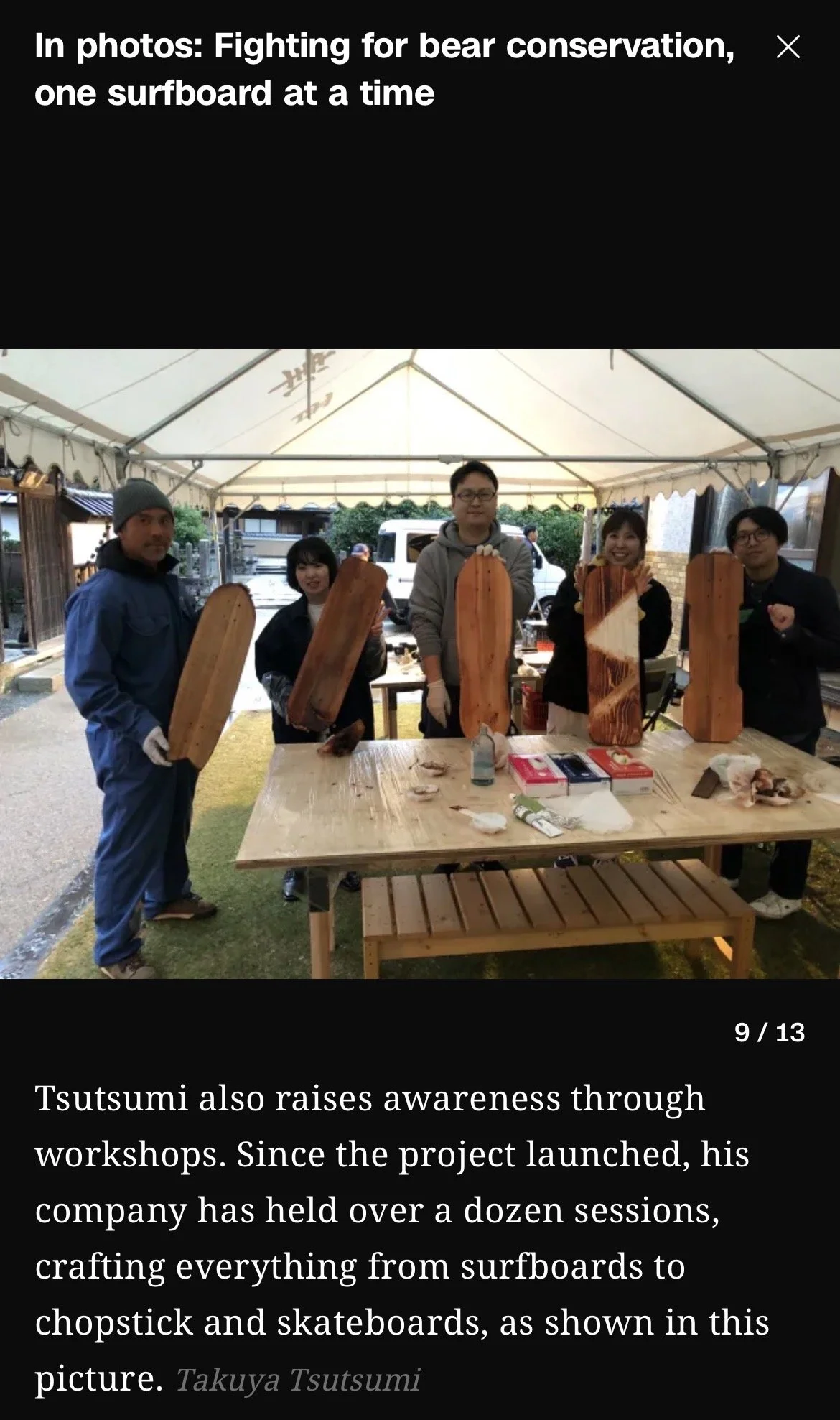
BEARS WOOD PROJECTでは、そうした木をサーフボードやスケートボードへと生まれ変わらせています。その取り組みから生まれた木と漆のサーフボードが「漆板-siita-」です。
山に学び、里で作り、海で遊ぶ。
一枚のサーフボードを入り口に、山と海、人と自然、そして昔から受け継がれてきた漆の文化までがつながっていく。
今回CNNを通して、京都・京北の森から仲間たちと始めた取り組みを、世界の方々に知っていただけることをとても嬉しく思います。
これからも、自然からいただいたものを無駄にせず、それぞれの技術や知恵を持ち寄りながら、新しい価値へとつないでいく。
そして漆という素材を通して、人と森、人と自然が共に生きていく未来を、仲間たちと一緒に考えていきたいと思います。
今回、私たちの活動に関心を持ち、丁寧に取材し、記事にしてくださったCNN Features WriterのSalomé Grouardさんに心より感謝いたします。
京都・京北の森で仲間たちと続けてきた小さな活動に目を向け、その背景にある人と熊、森との関係、そして漆を通したものづくりの可能性を、世界へ伝えていただけたことをとても嬉しく思います。
Thank you, Salomé, for taking the time to listen to our story and for sharing it with people around the world. We hope to welcome you to Kyoto someday!
ぜひCNNの記事をご覧ください。
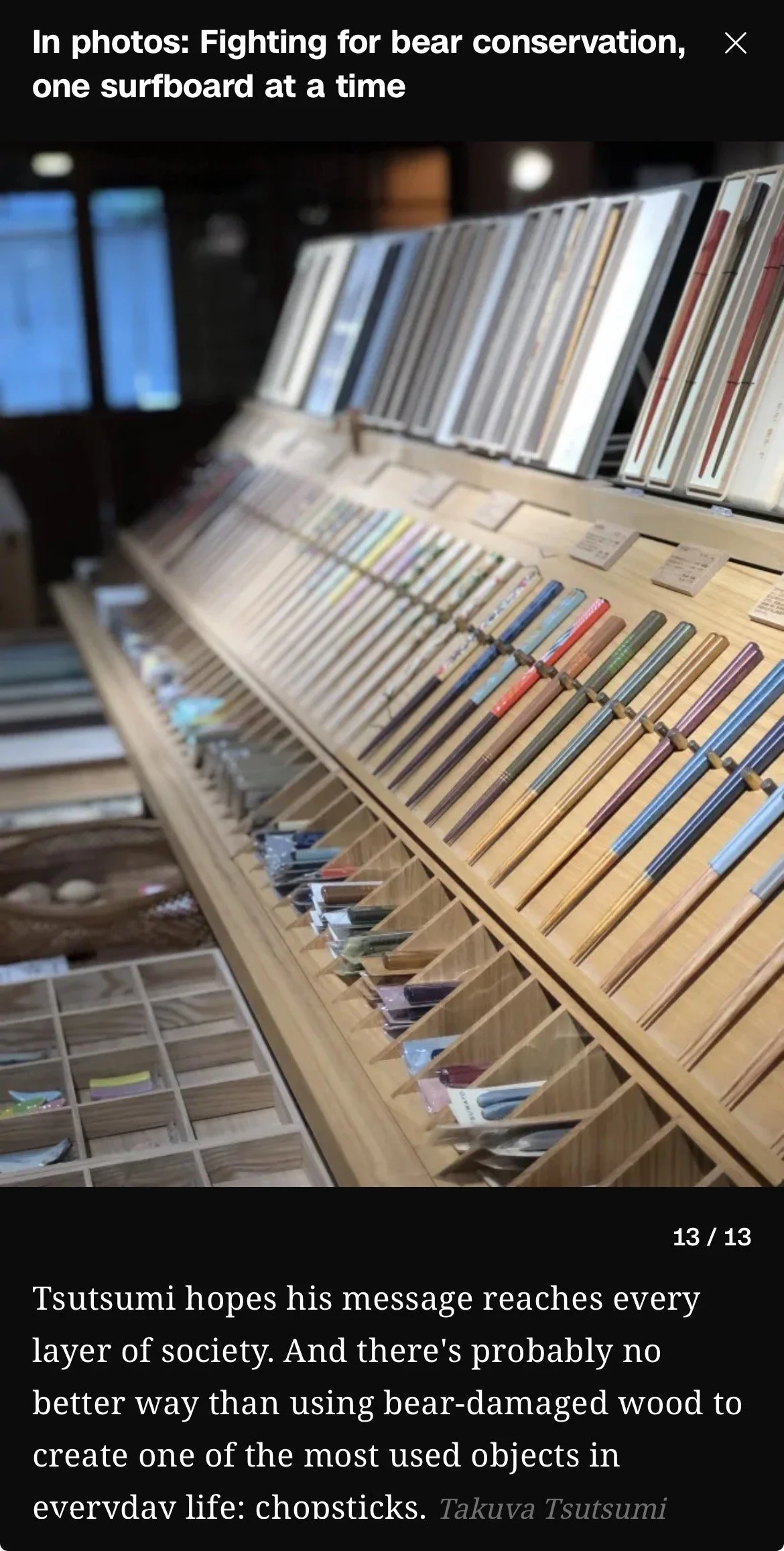
CNN「This Japanese artisan turns bear-scarred trees into surfboards and skateboards」
関連プロジェクト
プロジェクトメンバー
森、木工、ものづくり、漆。それぞれの専門や経験を持つ仲間たちと一緒に、このプロジェクトを進めています。
BEARS WOOD PROJECT and Urushi Surfboard “siita” Featured on CNN’s “Call to Earth”
We are very happy to share that the BEARS WOOD PROJECT, which we have been working on together with our friends and collaborators, and “siita,” our wooden surfboard finished with urushi lacquer, have been featured in CNN’s environmental series, “Call to Earth.”
The article introduces our efforts to give new life and value to trees damaged by bears stripping their bark — a phenomenon known in Japan as kuma-hagi.
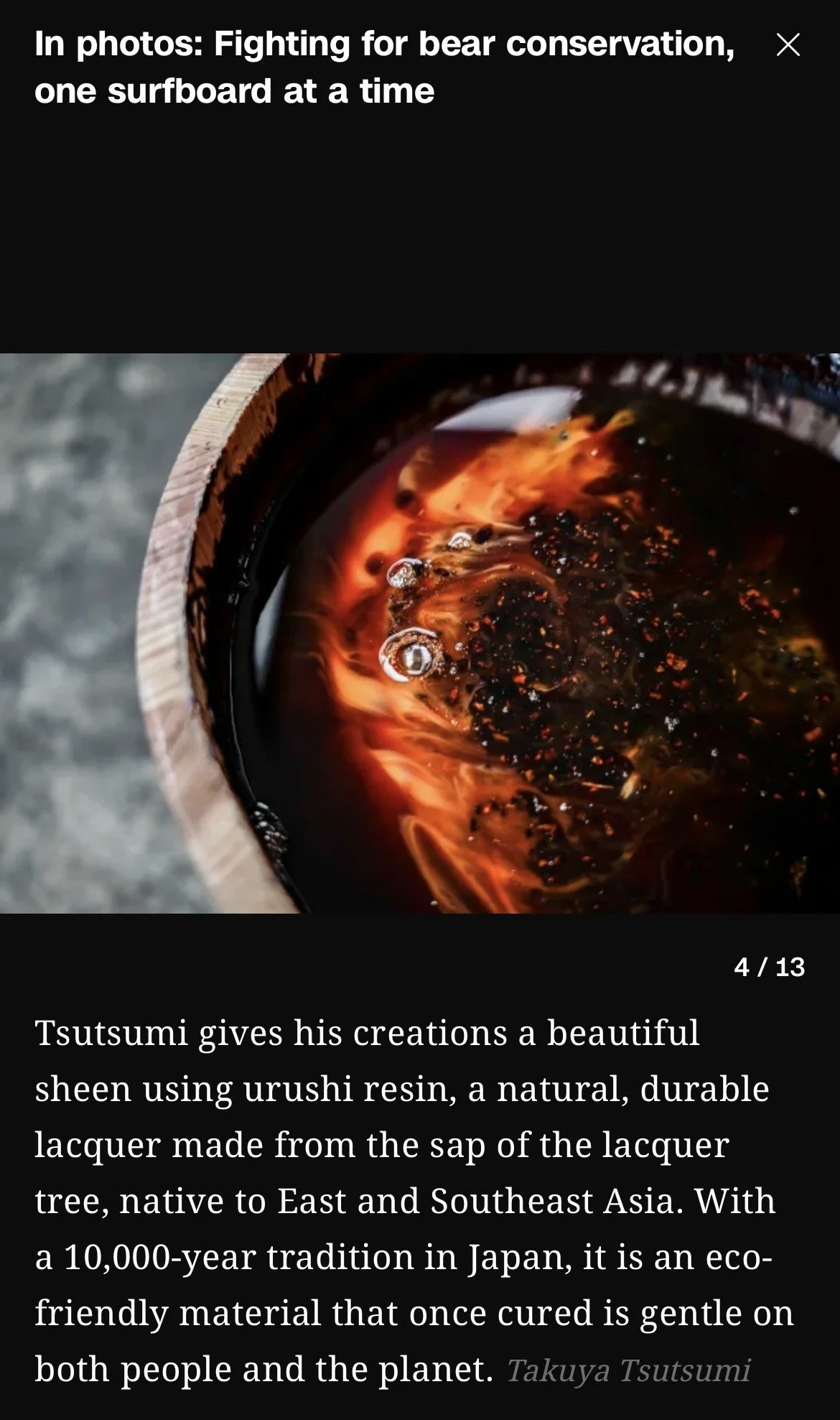
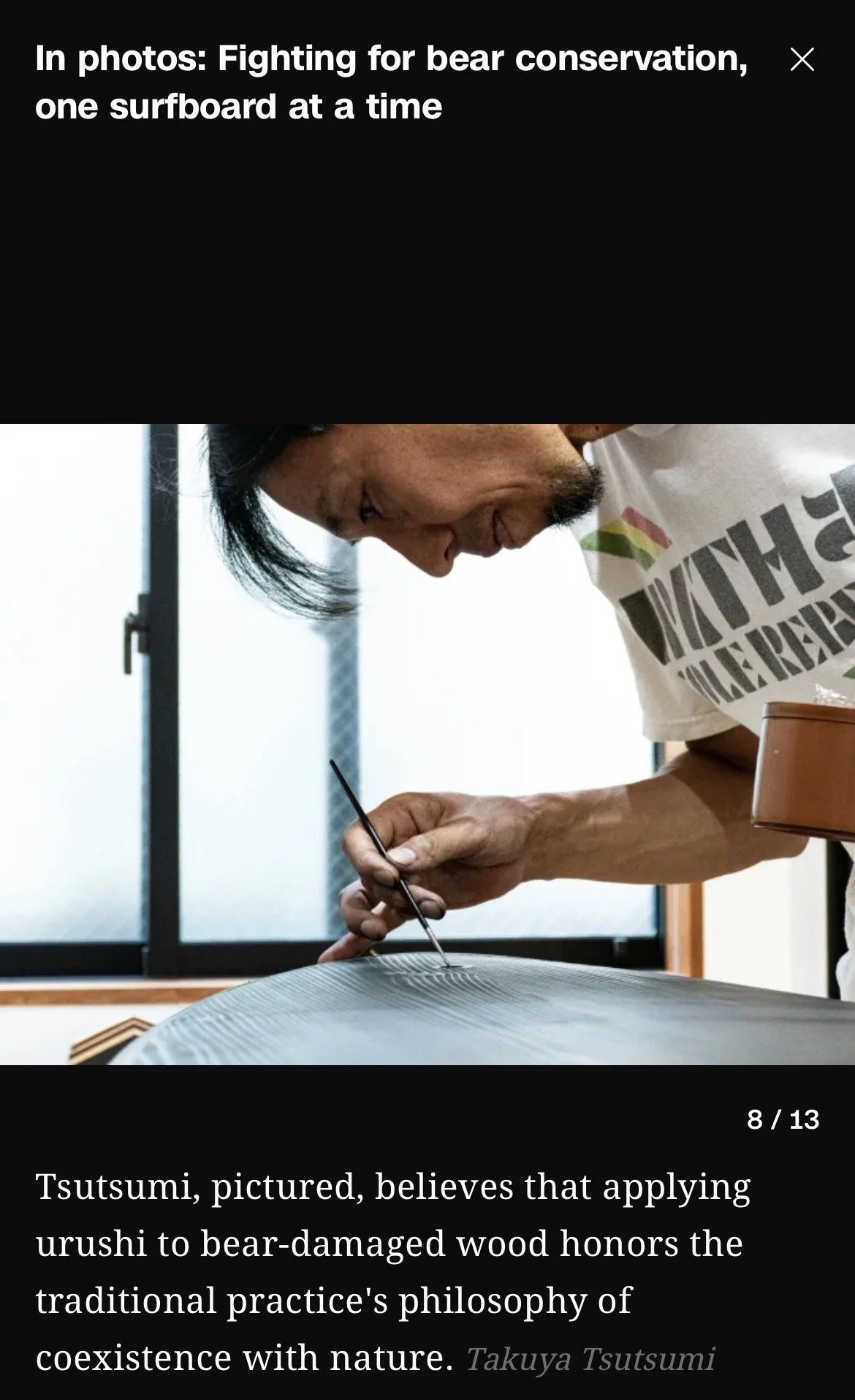
Rather than simply seeing these trees as damaged timber with reduced commercial value, we embrace the scars and natural distortions as part of each tree’s unique story, transforming the wood into something new through craftsmanship and urushi.
The BEARS WOOD PROJECT began with a simple question:
“Instead of seeing bears as the problem, could we think about how people, bears, and forests can live together?”
Trees that have grown over many years.
The traces left by bears.
The people who work in the forest.
And the craftspeople who give the wood a new life.
Through the BEARS WOOD PROJECT, we transform this wood into surfboards, skateboards, and other objects. One of the projects born from this approach is “siita,” a wooden surfboard finished with urushi lacquer.
Learn from the mountains, make in the village, play in the ocean.
Through a single surfboard, mountains and oceans, people and nature, and the culture of urushi that has been passed down for generations can all become connected.
We are truly grateful that, through CNN, this small project that began with friends in the forests of Keihoku, Kyoto, now has the opportunity to reach people around the world.
We hope to continue making the most of what nature gives us, bringing together the different skills and knowledge of our collaborators to create new value from local resources.
And through urushi, we hope to keep exploring a future in which people and forests, and people and nature, can continue to live together.
Special Thanks
We would like to express our sincere gratitude to Salomé Grouard, Features Writer at CNN, for taking an interest in our work, listening carefully to our story, and sharing it with people around the world.
It means a great deal to us that a project we have been developing together in the forests of Keihoku has been introduced not only through the objects we make, but also through the ideas behind them — our relationship with bears and forests, and the possibilities of craftsmanship and urushi.
Thank you, Salomé, for taking the time to listen to our story and for sharing it with people around the world. We hope to welcome you to Kyoto someday!
Please read the full CNN story here:
CNN — “This Japanese artisan turns bear-scarred trees into surfboards and skateboards”
Related Projects
Project Members
This project is made possible by friends and collaborators with different skills and perspectives — from forestry and woodworking to design, craftsmanship, and urushi.